• 39, Avenue de la Liberté, 68000 COLMAR
  • Monday to Friday : 10am - 4pm
  • FrançaisFrançais
  • EnglishEnglish
  • Urological interventions
    • Prostate
      • Biopsy
      • Penile implant
      • Prostate cancer – Radical prostatectomy
      • Prostate cancer – Focused ultrasound
      • Benign prostatic hyperplasia
    • Bladder
      • Bladder cancer
      • Urinary calculi
      • Uterine prolapse (women)
      • Urinary incontinence – Artificial Sphincter
      • Female urinary incontinence – Slings
    • Kidneys
      • Kidney cancer
    • Testicles
      • Testicular cancer
  • Robotic surgery
  • Our doctors
  • Videos
  • Urological interventions
    • Prostate
      • Biopsy
      • Penile implant
      • Prostate cancer – Radical prostatectomy
      • Prostate cancer – Focused ultrasound
      • Benign prostatic hyperplasia
    • Bladder
      • Bladder cancer
      • Urinary calculi
      • Uterine prolapse (women)
      • Urinary incontinence – Artificial Sphincter
      • Female urinary incontinence – Slings
    • Kidneys
      • Kidney cancer
    • Testicles
      • Testicular cancer
  • Robotic surgery
  • Our doctors
  • Videos
CONTACT US

Author: Stéphane Pierre

4 December 2024

How is prostate cancer diagnosed?

How is prostate cancer diagnosed?

Before diving into the diagnostic stages, find out what symptoms to look out for in our guide : What are the symptoms of prostate cancer?

Prostate cancer is one of the most common cancers in men, particularly after the age of 50. If you are experiencing symptoms such as urinary problems, or simply wish to undergo preventive screening, it is essential to understand the key steps involved in making an accurate diagnosis. Here’s a complete guide to the prostate cancer diagnosis process.

An abnormal psa level should lead to a consultation with a urologist.

Contents

  • The importance of early diagnosis
  • Steps in diagnosing prostate cancer
  • What to do after a diagnosis
  • When should you go for screening?
  • Conclusion

The importance of early diagnosis

Prostate cancer is often asymptomatic in its early stages. Early diagnosis enables :

  • Rapid care.
  • Reduced risk of complications.
  • A wider choice of effective treatments.

If you experience symptoms such as difficulty in urinating, frequent urination at night or pelvic pain, it is vital to consult a specialist.

Steps in diagnosing prostate cancer

Initial consultation with a urologist

  • Analysis of symptoms: The urologist will ask questions about your family history, your lifestyle and your symptoms.
  • Assessment of risk factors: Age, heredity, ethnic origin and pre-existing medical conditions.

Clinical examination: rectal examination

  • This quick, painless examination allows the doctor to palpate the prostate via the rectum to detect any abnormalities (induration), enlargement).
  • Although uncomfortable for some, it remains a key screening tool.

Biological tests: PSA assay

  • PSA (Prostate Specific Antigen) is a protein produced by the prostate gland.
  • A high level may indicate a problem: inflammation, benign hypertrophy or cancer.
  • This test is often used in addition to the digital rectal examination (DRE).

Medical imaging to confirm anomalies

  • Multiparametric MRI:
    • Advanced imaging to visualise the prostate and identify suspicious areas.
    • It is particularly useful for guiding biopsies.
  • Transrectal ultrasound :
    • Used to measure the size of the prostate and detect abnormalities.

Prostate biopsy: the definitive examination

  • If any abnormalities are detected, a biopsy is performed.
  • This involves taking samples of prostate tissue for laboratory analysis.
  • The results confirm the presence of cancer and determine its aggressiveness (Gleason score).

What to do after a diagnosis

Once the diagnosis has been made, several stages follow :

  • Determine the stage of the cancer (localised or metastatic).
  • Discuss treatment options tailored to your situation (surgery, radiotherapy, hormone therapy, etc.).

When should you go for screening?

  • From the age of 50: annual consultation for men with no risk factors.
  • From the age of 40-45: If you have a family history of prostate cancer or if you belong to a high-risk population (men of African origin, for example).
  • If you experience unusual urinary symptoms, even if you are younger.

Conclusion

Prostate cancer may be silent in its early stages, but signs such as urinary problems, pain or blood in the urine should be taken seriously. Early detection is essential to improve the chances of treatment and cure.

To find out more, or to consult a specialist, book an appointment at the Colmar Urology Center. We’re here to support you at every stage of your healthcare journey.

Make an appointment
read more
by Stéphane Pierrein Actu0
29 September 2021

Ranking - Le Point 2021

Ranking - Le Point Health Magazine 2021

The “Le Point” magazine has just unveiled its ranking of the best public/private hospitals and clinics in France for 2021.

We are happy to share the rankings for some of the disorders that can be treated at the Colmar Urology Centre.

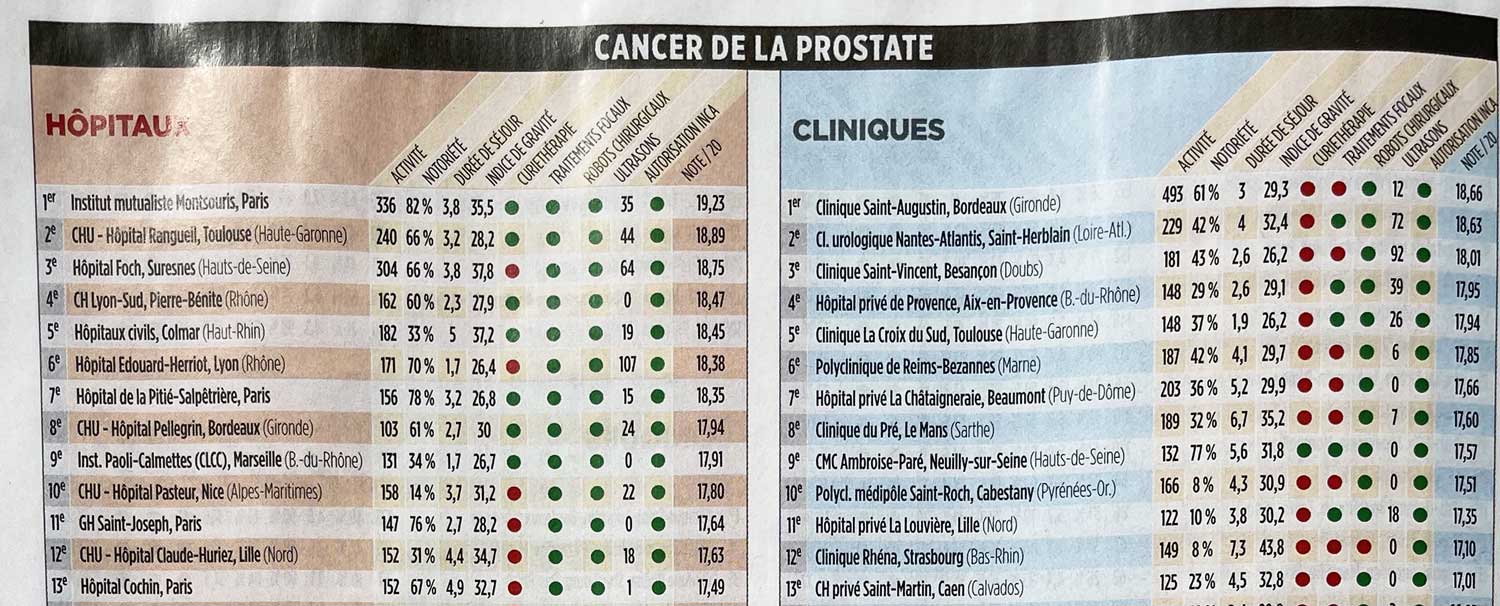
> The Colmar Urology Centre is ranked 5th for the prostate cancer surgery

Ranking among 177 hospitals and clinics performing prostate cancer surgery.

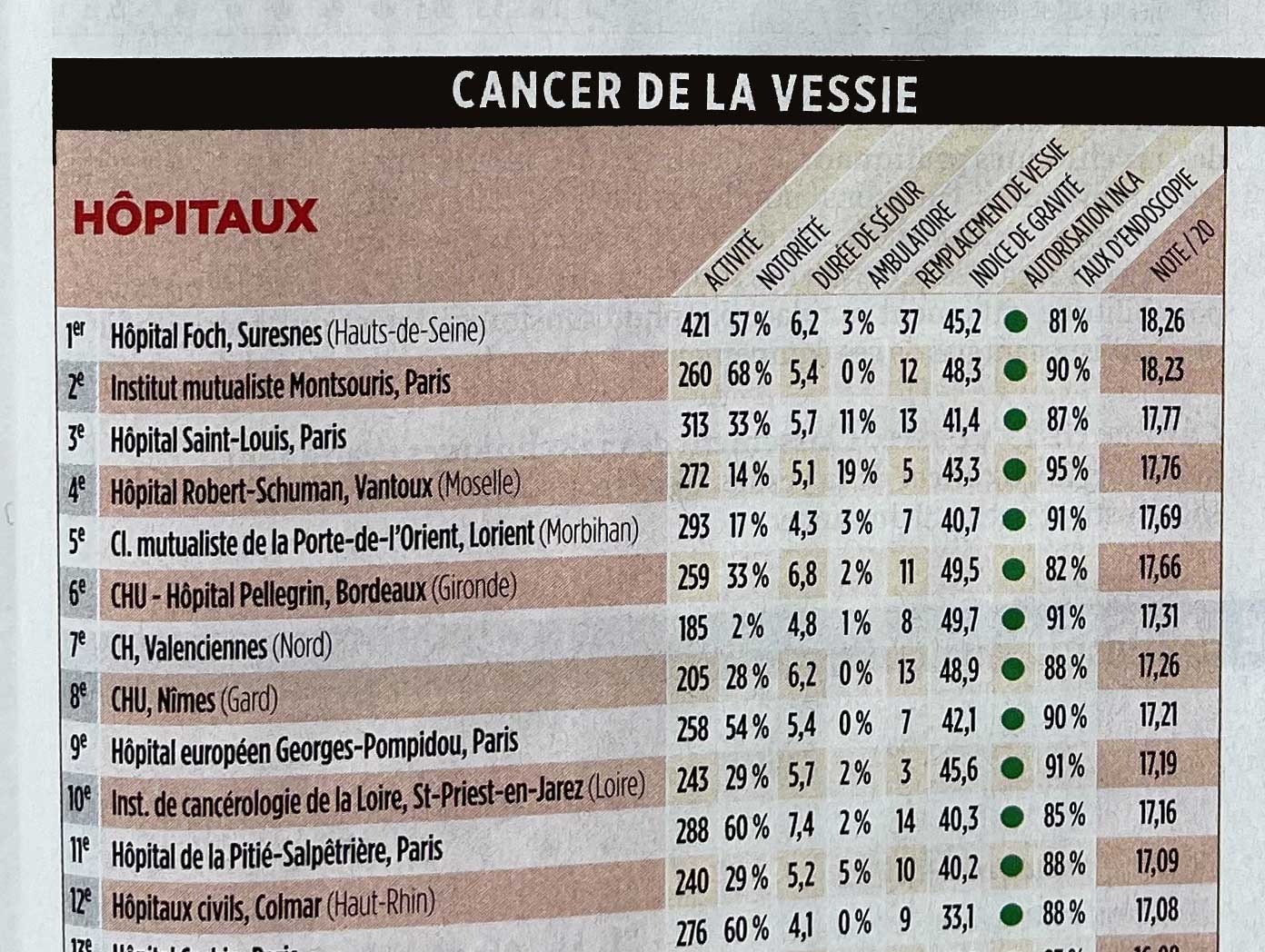
> The Colmar Urology Centre is ranked 12th for the bladder cancer surgery

Ranking among 299 hospitals performing bladder cancer surgery.

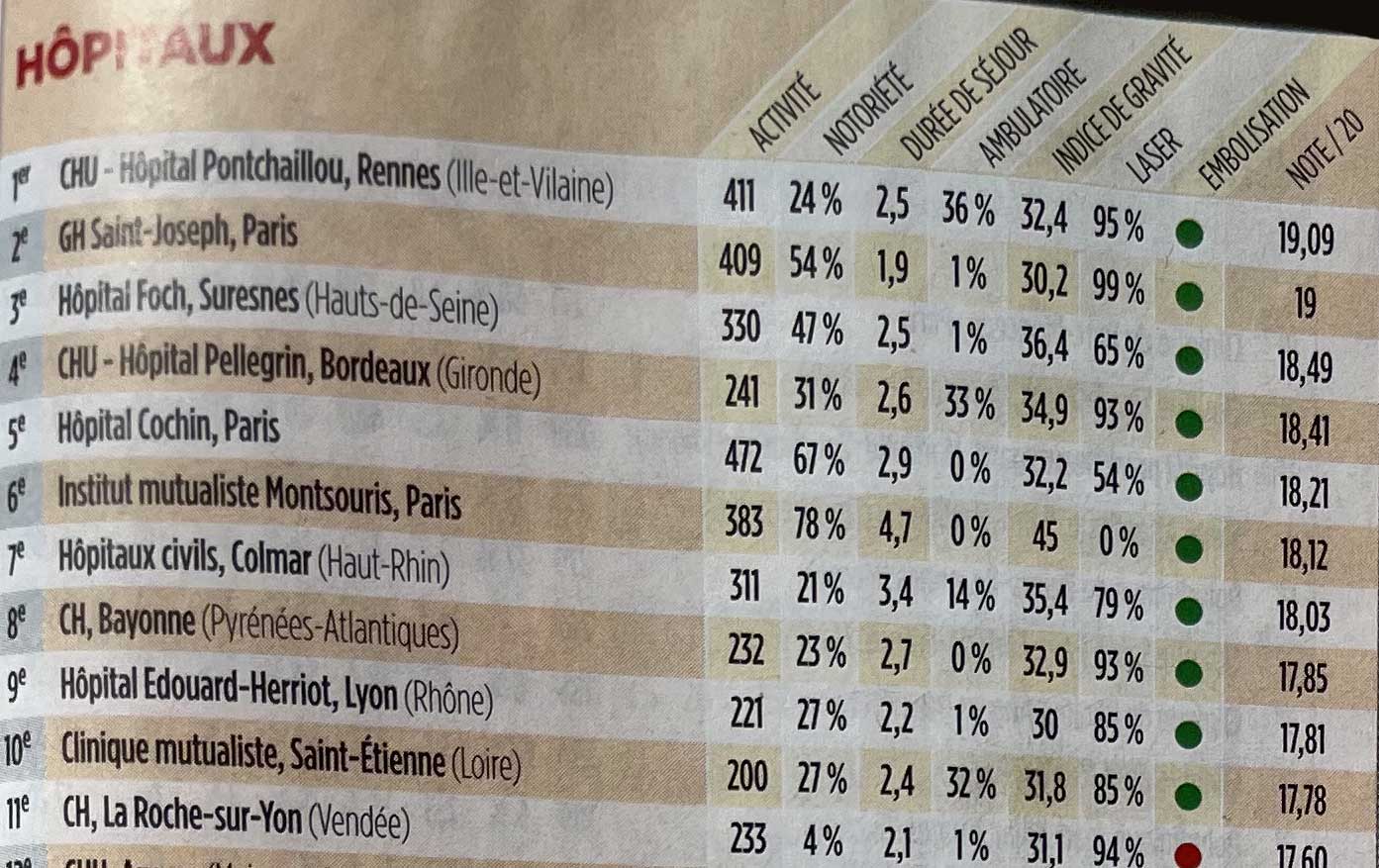
> The Colmar Urology Centre is ranked 7th for the prostate adenoma surgery

Ranking among 282 hospitals performing bladder cancer surgery.

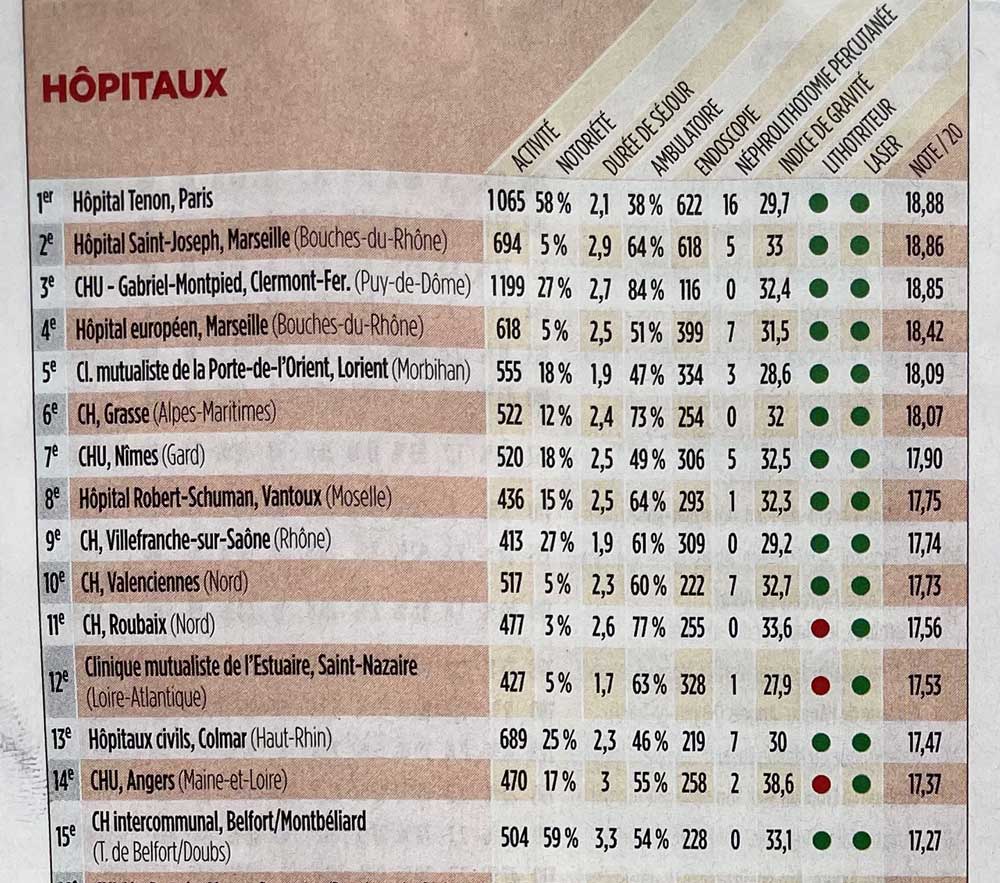
> The Colmar Urology Centre is ranked 13th for the treatment of urinary calculi

Ranking among 348 hospitals taking care of urinary calculi

 The “Le Point” journalists have taken into account various criteria in order to establish a ranking of the 1400 health-care institutions in France (hospitals and clinics). To get more information about the methodology, you can refer to this article.


20

read more
by Stéphane Pierrein Ranking0
16 November 2020

Ranking - Le Point Santé 2020

Ranking - Le Point Santé 2020

The “Le Point” magazine has just unveiled its ranking of the best public/private hospitals and clinics in France for 2020.

We are happy to share the rankings for some of the disorders that can be treated at the Colmar Urology Centre.

Palmarès du Point 2020 : les établissements Doctocare parmi les meilleurs de France - Doctocare

> The Colmar Urology Centre is ranked 7th for the prostate cancer surgery

Ranking among 177 hospitals and clinics performing prostate cancer surgery.

> The Colmar Urology Centre is ranked 14th for the bladder cancer surgery

Ranking among 302 hospitals performing bladder cancer surgery.

> The Colmar Urology Centre is ranked 9th for the prostate adenoma surgery

Ranking among 282 hospitals performing bladder cancer surgery.

> The Colmar Urology Centre is ranked 10th for the treatment of urinary calculi

Ranking among 347 hospitals taking care of urinary calculi

 The “Le Point” journalists have taken into account various criteria in order to establish a ranking of the 1400 health-care institutions in France (hospitals and clinics). To get more information about the methodology, you can refer to this article.


20

read more
by Stéphane Pierrein Ranking0
20 February 2020

"My duty is to inform my patient"

"My duty is to inform my patient"

Article 35 of the Code of medical ethics defines the terms of the information that the doctor must give the patient ‘…honest, clear and appropriate to the patient’s condition, and to the investigations and treatment the physician offers…’.

Information, which is always oral, is essential. In addition to this information, a written document may be given to the patient to allow him to refer to it in order to give free and informed consent.

Information, which is mainly oral, is essential

A practical sheet on the information before and after each surgical intervention is available on the website of the French Association of Urology on the following link:

https://www.urofrance.org/lurologie-grandpublic/fiches-patient/fiches-traitements.html


read more
by Stéphane Pierrein Actu0
19 November 2019

Ranking "Le Point Santé 2019"

Ranking - Le Point Santé 2019

The “Le Point” magazine has just unveiled its ranking of the best public/private hospitals and clinics in France for 2019.

We are happy to share the rankings for some of the disorders that can be treated at the Colmar Urology Centre.

> The Colmar Urology Centre is ranked 6th for the prostate cancer surgery

Ranking of the 181 hospitals and clinics performing prostate cancer surgery.

> The Colmar Urology Centre is ranked 11th for the bladder cancer surgery

Ranking of the 296 hospitals performing bladder cancer surgery.

> The Colmar Urology Centre is ranked 6th for the prostate adenoma surgery


Ranking of the 285 hospitals performing bladder cancer surgery.

 The “Le Point” journalists have taken into account various criteria in order to establish a ranking of the 1400 health-care institutions in France (hospitals and clinics). To get more information about the methodology, you can refer to this article.

read more
by Stéphane Pierrein Ranking0

Posts pagination

1 2

UROLOGY CENTRE OF COLMAR

39 Avenue de la Liberté, 68000 COLMAR

Free car-park / Disabled access
45 minutes away from Basel-Mulhouse and 55 minutes from Strasbourg

USEFUL LINKS

Colmar Civilians Hospitals
Uro France

 Rated 4.5 out of 5

RANKING “LE POINT SANTÉ” 2024

Prostate cancer : 10th out of 138 hospitals (overall score of 18,42/20)
Prostate adenoma : 3th out of 246 hospitals (overall score of 19,16/20)
Urinary calculi : 8th out of 269 hospitals (overall score of 18,30/20)
More details here

Colmar Urology Centre © 2024 – All rights reserved – Legal notice – Site improved and maintained by PS-Web

Wordpress