

- 39, Avenue de la Liberté, 68000 COLMAR
- Monday to Friday : 10am - 4pm

The thought of undergoing surgery often brings stress: fear of pain, long hospital stays, or a difficult convalescence. At the Colmar Urology Center, we implement an innovative method to transform this experience: ERAS (Enhanced Recovery After Surgery).
But what exactly is it, and how does it change your surgical journey?
Enhanced Recovery After Surgery is a multidisciplinary approach designed to minimize the surgical stress on your body. The goal isn’t just to get you out “faster” for the sake of efficiency, but because the better you recover, the sooner you return to your home environment, which significantly reduces the risk of infections and complications.
Everything starts long before you enter the operating room.
By utilizing the Da Vinci robotic system and laparoscopic techniques, our surgeons perform millimetric incisions.
This is the pillar of the ERAS protocol.
By reducing time spent in bed and in the hospital, the benefits are clinically proven:
A word from the team: “ERAS is a contract of trust between the patient and the medical team. The more prepared and active you are, the faster your body heals.”
Feel free to ask any questions about the ERAS protocol during your next consultation at the Colmar Urology Center. Your comfort and safety are our top priorities.
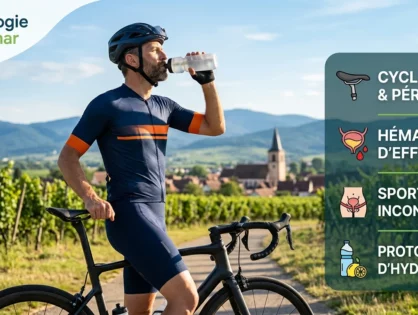
Physical activity is a cornerstone of a healthy lifestyle. It reduces the risk of urological cancers, improves erectile function, and helps with bladder control. However, from concerns about cycling to the risks of dehydration, sports can sometimes raise specific health questions.
The team at the Colmar Urology Center breaks down the best practices to balance athletic performance with urological health.
This is the most common question we hear in Colmar, a region famous for its cycling: “Is cycling bad for my prostate?”
The Reality: No, cycling does not increase the risk of prostate cancer or an enlarged prostate (BPH). However, intensive riding can cause perineal compression.
Some long-distance runners or athletes in high-impact sports (like rugby or boxing) occasionally notice pinkish urine after an intense session. This is known as exercise-induced hematuria.
While often caused by micro-trauma to the bladder wall (which “jostles” during a run, especially if empty), caution is key.
The Golden Rule: Any presence of blood in the urine—even if painless and seemingly linked to exercise—requires a urological evaluation to rule out underlying causes such as stones or polyps.
Stress urinary incontinence isn’t just for seniors. It affects many female athletes (CrossFit, running, trampolining) due to high intra-abdominal pressure.
Dehydration is the number one risk factor for kidney stones in athletes. During hot summers, vigilance is vital.
Here is the protocol recommended by our experts to keep your kidneys healthy:
Never start a session if your urine is dark.
The stomach can only absorb about 600 to 800 ml per hour.
This is the critical window where crystals can aggregate in the kidneys.
Exercise is your best ally, but it requires paying attention to your body’s urological signals. Whether you are cycling through the Alsace vineyards or hiking the Vosges trails, remember to hydrate consistently.
Noticed an unusual symptom after training? The team at the Colmar Urology Center is available for a full check-up to support your athletic journey.
Note: This article is for informational purposes and does not replace professional medical advice.