
• 39, Avenue de la Liberté, 68000 COLMAR
  • Monday to Friday : 10am - 4pm
  • FrançaisFrançais
  • EnglishEnglish
  • Urological interventions
    • Prostate
      • Biopsy
      • Penile implant
      • Prostate cancer – Radical prostatectomy
      • Prostate cancer – Focused ultrasound
      • Benign prostatic hyperplasia
    • Bladder
      • Bladder cancer
      • Urinary calculi
      • Uterine prolapse (women)
      • Urinary incontinence – Artificial Sphincter
      • Female urinary incontinence – Slings
    • Kidneys
      • Kidney cancer
    • Testicles
      • Testicular cancer
  • Robotic surgery
  • Our doctors
  • Videos
  • Urological interventions
    • Prostate
      • Biopsy
      • Penile implant
      • Prostate cancer – Radical prostatectomy
      • Prostate cancer – Focused ultrasound
      • Benign prostatic hyperplasia
    • Bladder
      • Bladder cancer
      • Urinary calculi
      • Uterine prolapse (women)
      • Urinary incontinence – Artificial Sphincter
      • Female urinary incontinence – Slings
    • Kidneys
      • Kidney cancer
    • Testicles
      • Testicular cancer
  • Robotic surgery
  • Our doctors
  • Videos
CONTACT US

Tag: prevention

Urological Surgery: How We Help You Recover Faster (The ERAS Protocol)
11 June 2026

Urological Surgery: How We Help You Recover Faster (The ERAS Protocol)

Urological Surgery: How We Help You Recover Faster (The ERAS Protocol)

The thought of undergoing surgery often brings stress: fear of pain, long hospital stays, or a difficult convalescence. At the Colmar Urology Center, we implement an innovative method to transform this experience: ERAS (Enhanced Recovery After Surgery).

But what exactly is it, and how does it change your surgical journey?

Table des matières

1. What is ERAS?

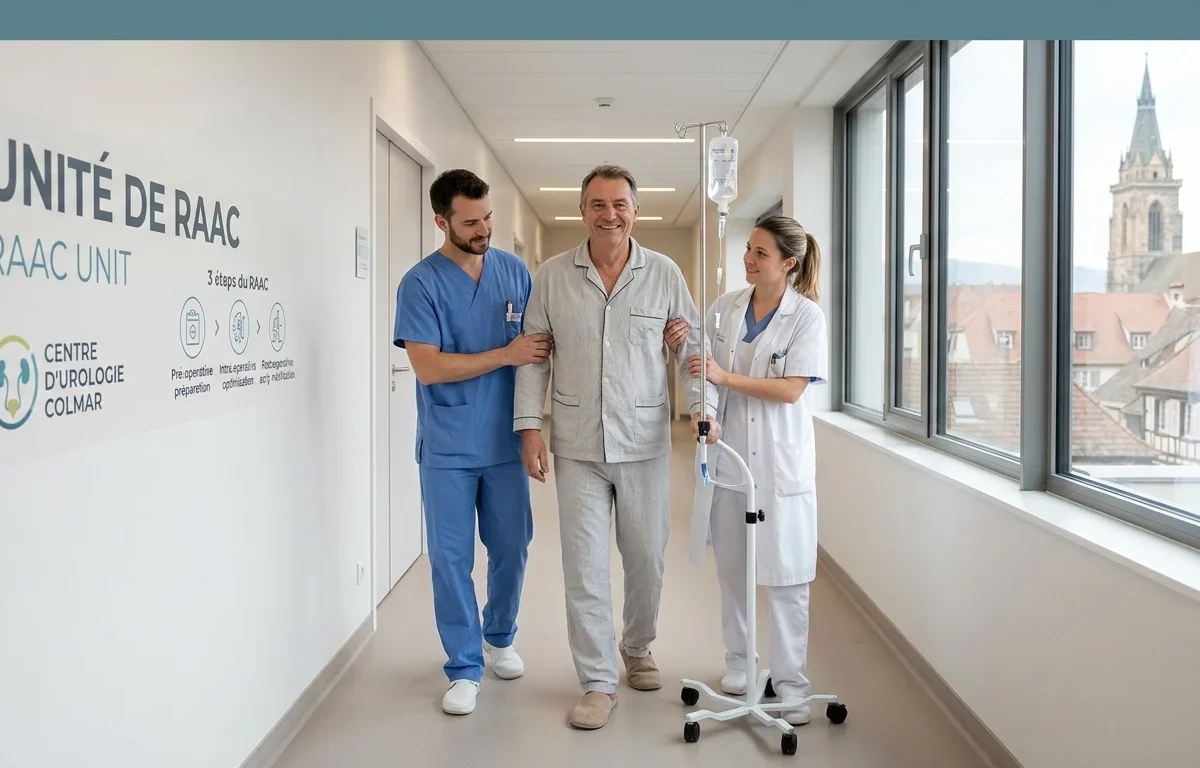
Enhanced Recovery After Surgery is a multidisciplinary approach designed to minimize the surgical stress on your body. The goal isn’t just to get you out “faster” for the sake of efficiency, but because the better you recover, the sooner you return to your home environment, which significantly reduces the risk of infections and complications.

2. The 3 Stages of Your Recovery in Colmar

1. Before the Procedure: Becoming a Partner in Your Care

Everything starts long before you enter the operating room.

  • Information: A patient who knows what to expect is less stressed and recovers better. We walk you through every step.
  • Nutrition: The days of strict 12-hour fasting are over! Under the ERAS protocol, we often allow specific carbohydrate drinks up to 2 hours before anesthesia to ensure your body maintains its energy levels.

2. During the Procedure: “Gentle” Surgery

By utilizing the Da Vinci robotic system and laparoscopic techniques, our surgeons perform millimetric incisions.

  • Targeted Anesthesia: Our anesthesiologists prioritize protocols that limit the use of opioids, thereby reducing nausea and fatigue upon waking.

3. After the Procedure: Early Mobilization

This is the pillar of the ERAS protocol.

  • Early Movement: Just a few hours after surgery, with the help of our nursing staff, you are encouraged to sit up and take your first steps.
  • Quick Nutrition: You resume drinking and eating sooner to restart your digestive system.
  • Returning Home: Once all safety criteria are met, you can return home—often on the same day or the following morning—with coordinated follow-up care.

3. Why Choose the ERAS Path in Colmar?

By reducing time spent in bed and in the hospital, the benefits are clinically proven:

  1. Fewer Complications: A lower risk of blood clots (thrombosis) and hospital-acquired infections.
  2. Less Pain: Proactive and personalized pain management.
  3. Faster Return to Normal: A quicker transition back to your professional and social life.

A word from the team: “ERAS is a contract of trust between the patient and the medical team. The more prepared and active you are, the faster your body heals.”

Scheduled for Surgery Soon?

Feel free to ask any questions about the ERAS protocol during your next consultation at the Colmar Urology Center. Your comfort and safety are our top priorities.

I'm making an appointment

References and Sources (*)

  • GRACE (Groupe francophone de Réhabilitation Améliorée après Chirurgie).
  • HAS (Haute Autorité de Santé) – Recommandations sur la mise en œuvre de la RAAC.
  • Fiches d’information de l’Association Française d’Urologie (AFU) sur la chirurgie robotique.
read more
by Stéphane Pierrein Actu0
Urology & Sports: A Guide to Training Safely
5 April 2026

Urology & Sports: A Guide to Training Safely

Physical activity is a cornerstone of a healthy lifestyle. It reduces the risk of urological cancers, improves erectile function, and helps with bladder control. However, from concerns about cycling to the risks of dehydration, sports can sometimes raise specific health questions.

The team at the Colmar Urology Center breaks down the best practices to balance athletic performance with urological health.

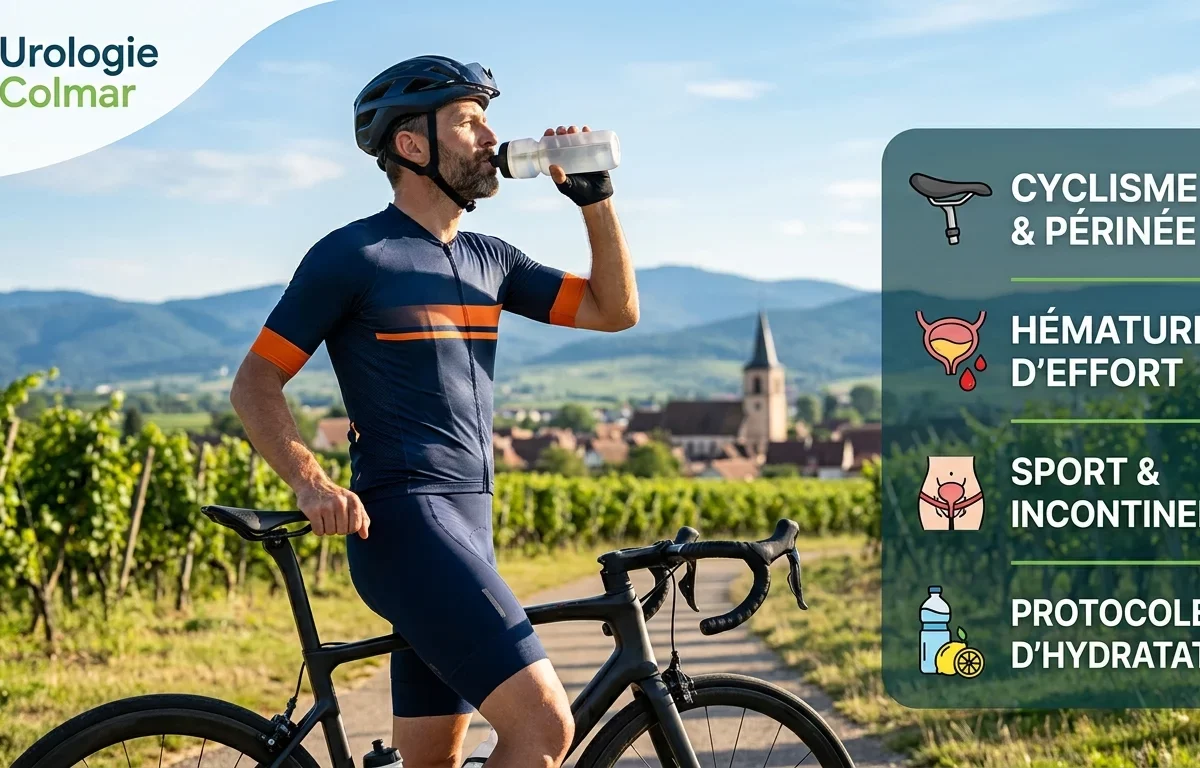
1. Cycling & Prostate Health: Debunking the Myths

This is the most common question we hear in Colmar, a region famous for its cycling: “Is cycling bad for my prostate?”

The Reality: No, cycling does not increase the risk of prostate cancer or an enlarged prostate (BPH). However, intensive riding can cause perineal compression.

  • The Symptoms: Numbness, tingling, or pain in the perineal area.
  • The Solution: Choose a “cut-out” saddle (with a central opening) to relieve pressure on the urethra and nerves. Also, ensure your saddle is perfectly level.


2. Blood in Urine After Exercise: Should You Worry?

Some long-distance runners or athletes in high-impact sports (like rugby or boxing) occasionally notice pinkish urine after an intense session. This is known as exercise-induced hematuria.

While often caused by micro-trauma to the bladder wall (which “jostles” during a run, especially if empty), caution is key.

The Golden Rule: Any presence of blood in the urine—even if painless and seemingly linked to exercise—requires a urological evaluation to rule out underlying causes such as stones or polyps.


3. High-Impact Sports & Bladder Control

Stress urinary incontinence isn’t just for seniors. It affects many female athletes (CrossFit, running, trampolining) due to high intra-abdominal pressure.

  • The Message: It is not an inevitable part of being an athlete.
  • The Action: Specific pelvic floor physical therapy and learning “pelvic protection” techniques during exercise allow you to stay active without discomfort.


4. Hydration Protocol: Your Shield Against Kidney Stones

Dehydration is the number one risk factor for kidney stones in athletes. During hot summers, vigilance is vital.

Here is the protocol recommended by our experts to keep your kidneys healthy:

A. Pre-Workout (Anticipation)

Never start a session if your urine is dark.

  • 2 Hours Before: Drink 500 ml of water. Your urine should be pale yellow (like lemonade).


B. During Workout (Maintenance)

The stomach can only absorb about 600 to 800 ml per hour.

  • The Rhythm: Take 2 to 3 sips (150-200 ml) every 15 to 20 minutes.
  • The Choice: For efforts lasting over an hour, add a pinch of salt to your bottle to compensate for sodium loss.


C. Post-Workout (The “Rinse”)

This is the critical window where crystals can aggregate in the kidneys.

  • The Rule: Drink 1.5 times the weight lost within the following 2 hours.
  • The Urologist’s Tip: Add fresh lemon juice to your recovery water. The citrate it contains is a powerful natural inhibitor against stone crystallization.


Summary

Exercise is your best ally, but it requires paying attention to your body’s urological signals. Whether you are cycling through the Alsace vineyards or hiking the Vosges trails, remember to hydrate consistently.

Noticed an unusual symptom after training? The team at the Colmar Urology Center is available for a full check-up to support your athletic journey.


Note: This article is for informational purposes and does not replace professional medical advice.

Sources & References:

  • French Association of Urology (AFU) – Patient Information on Lithiasis and Prevention.
  • Journal of Urology – “Cycling and Urogenital Health: A Global Study.”
  • European Association of Urology (EAU) Guidelines on Male Lower Urinary Tract Symptoms.
read more
by Stéphane Pierrein Actu0
AI at the Service of Your Health: The Urology Revolution in Colmar
16 December 2025

AI at the Service of Your Health: The Urology Revolution in Colmar

read more
by Stéphane Pierrein Actu0

UROLOGY CENTRE OF COLMAR

39 Avenue de la Liberté, 68000 COLMAR

Free car-park / Disabled access
45 minutes away from Basel-Mulhouse and 55 minutes from Strasbourg

USEFUL LINKS

Colmar Civilians Hospitals
Uro France

 Rated 4.5 out of 5

RANKING “LE POINT SANTÉ” 2024

Prostate cancer : 10th out of 138 hospitals (overall score of 18,42/20)
Prostate adenoma : 3th out of 246 hospitals (overall score of 19,16/20)
Urinary calculi : 8th out of 269 hospitals (overall score of 18,30/20)
More details here

Colmar Urology Centre © 2024 – All rights reserved – Legal notice – Site improved and maintained by PS-Web

Wordpress